

Tales from Topographic Oceans became the first album in the UK to earn a gold certification prior to its release. It reached number-one on the UK Albums Chart for two weeks and peaked at number 6 on the Billboard 200.
Personnel

Vocals

Guitars, Vocals

Bass, Vocals

Keyboards

Percussion
Recommended Versions
Steven Wilson 2016 Stereo & 5.1 Remixes for Panegyric
Tales From Topographic Oceans is the fifth in a series of expanded Yes editions including 5.1 Surround mixes, new stereo mixes and High-Resolution stereo mixes of the original music. Additionally, both sets add extra material mixes on CD, while the Blu-Ray edition adds a wealth of extra audio material. Steven Wilson has produced the new mixes with the approval of the band. Both editions feature restored artwork overseen and approved by Roger Dean with an expanded booklet containing new sleeve-notes, photos and archive material making this the definitive edition of the album.
☟See Contents & Extras
Hybrid DVD-As feature 5.1 Surround mixes and High Resolution Stereo mixes of the album mixed from the original multi-track tapes along with the original mix of the album – all at 24/96.
Blu-Ray features all of the above – 5.1 mixes in DTS-HD MA, new mixes at 24/96, original mixes at 24/192 in LPCM Stereo + additional music including new instrumental mixes, new single edits, a complete album of alternative takes (including two previously unreleased sides – one studio, one live) and needle-drops of an original UK vinyl pressing and a US banded promo album pressing.
Special packaging for both formats, CD/DVD-A set in two double digi-packs in slipcase, CD/Blu-Ray in two mini vinyl replica gatefold card sleeves in slipcase.
Additional CD in Blu-Ray edition allows for the inclusion of the complete alternate album takes on CD.
This is the only version of Tales From Topographic Oceans to have been completely remixed from the original multitrack tapes since 1973. In keeping with all the other releases in this series, Steven Wilson’s approach for new stereo & 5.1 mixes is to faithfully retain the spirit & sounds of the original album mix, while applying modern mix techniques to bring further clarity to the individual instrument, vocal & overdubs for each track. The songs, instantly familiar to a multitude of YES fans, remain so, with the new mixes – especially in 5.1 form – providing a greater sense of space for each voice to be heard. Anderson’s voice seems to join the listener in the room, Howe & Wakeman’s solos glisten with clarity and White & Squire remind all that they were unmatched as a rhythm section during that period.
Contains:
– Album mixed in 24-96 5.1 DTS Lossless Surround from original multi-track sources.
– New Album mix in High Resolution Stereo
– Original Album mix (flat transfer) in High Resolution Stereo
– New Stereo Instrumental mixes in 24-96 LPCM
– Original Roger Dean artwork expanded & restored with material from the Roger Dean archive & with full approval of the artist.
– Presented as a 2 x digi-pack format in a slipcase with new sleeve notes by writer Sid Smith along with rare photos & archive material.
Extras:
– Dance of the Dawn (Extended Version of The Revealing Science of God)
– Dance of the Dawn (Studio Run-Through)
– High The Memory (Studio Run-Through)
– Giants Under The Sun (Studio Run-Through)
– Ritual (Live, Zurich, April 1974)
– The Revealing Science Of God (Single Edit)
– The Remembering (Single Edit)
– The Ancient (Single Edit)
– Ritual (Single Edit I)
– Ritual (Single Edit II)
Steven Wilson:
“My remix of Tales From Topographic Oceans will be the fifth in a series of expanded YES classics, released in 3CD/Blu-Ray and 2CD/2DVDA configurations. The album has been remixed in both stereo and 5.1 surround sound from the original multi-track tapes and approved by YES. I worked on and off for about 3 years on this new mix in my quest to do it justice, so I’m very happy to see it finally being released.
The new mixes have a clarity and vibrancy which I hope will satisfy the people who agree with me that it may just be YES‘ pre-eminent masterpiece, and encourage those who had perhaps dismissed it until now to give it another listen. Compared to other YES albums it’s certainly not an easy listen, but in my opinion it’s an under-rated slice of genius, the band working at the very peak of their powers to create one of the most ambitious, beautiful and eccentric albums in the whole rock music canon.”
Extras for BluRay Edition only:
– Full album instrumental mixes by Steven Wilson
– Two additional alternate takes
– A needle-drop of an original UK vinyl pressing
– A needle-drop of a US branded promo album pressing
☝ Hide Contents & Extras
Dan Hersch & Bill Inglot 2003 Stereo Remasters for Warner Music UK/USA
Available as:
HD 24-192 or 24-96 Downloads at HD Tracks
Gatefold CD at Amazon
Vinyl LP as per original release at Amazon
MP3 Downloads at iTunes (Standard Edition, Mastered for iTunes), iTunes (Deluxe Edition), 7 Digital,
Streaming at Apple Music, Spotify, Deezer, Tidal

The Box Set contains the following remastered albums with bonus tracks: Yes, Time and a Word, The Yes Album, Fragile, Close to the Edge, Tales from Topographic Oceans, Relayer, Going for the One, Tormato, Drama, 90125, Big Generator. Each individual album comes in a gatefold sleeve that replicates the original LP packaging.
Isao Kikuchi 2013 Stereo Remasters for Warner Music Japan

High Vibration is a 16 x Hybrid SACD Box Set made for the Japanese fans, containing their first 13 albums on 15 discs plus a bonus disc of extra tracks. All Remastered by Isao Kikuchi at 24-96 & 16-44.1 with a 220 page book in Japanese.
Albums: Yes, Time and a Word, The Yes Album, Fragile, Close to the Edge, Yessongs, Tales from Topographic Oceans, Relayer, Going for the One , Tormato, Drama, 90125, Big Generator and a Bonus Disc.
Bonus Disc: Something’s Coming, Dear Father, Roundabout (Single Edit), America, Total Mass Retain (Single Version), Soon (Single Edit), Abilene, Run Through The Light (Single Version), Run With The Fox, Owner Of A Lonely Heart (Move Yourself Mix), Leave It (Single Remix), Big Generator (Remix).
Listen
Spotify
Dan Hersch & Bill Inglot 2003 Stereo RemastersSweet Dreams, Classic Years 1971-79 - From Perpetual Change by David Watkinson
YES‘ successful tour of Australia, New Zealand, Japan, UK and the US came to an end in April 1974. For the band it was not before time. Jon and Chris had gone through a period of heated disagreements over their music which had caused a serious rift in their relationship. However, it never became serious enough to cause a major split and the band survived.
Jon remembers, ‘To make points with music, you have to be helpful to one another and definitely not set up barriers. To work towards a very harmonious sort of sound is the law of the land with this band, and I think it was broken on a few occasions… A time finally came when I decided that my weight should be heard. It was a time when I felt the music was suffering because of this… inner conflict.‘
The world tour had ensured that the band had long periods of time in which to write new material and exchange ideas for the next album. Everyone agreed that they would concentrate on longer pieces of music, carrying strong themes, or stories, and covering entire sides of the album.
Ideas were sought from the entire band, but it was Jon who came up with the final idea. He had been reading books on the inner self, specifically The Finding of the Third Eye by Vera Stanley-Adler, and Paramhansa Yogananda’s The Autobiography of a Yogi (given to Jon by King Crimson member Jamie Muir) which immediately captured his imagination. Jon admitted that he learnt a lot from Jamie Muir. ‘We started talking about meditation in music – not the guru-type but some really heavy stuff, and he gave me these books of Shastric scriptures. As I read them, I became engrossed with the idea of making music around the concepts they spoke of, making a four-part epic built around the four-part themes of which I was reading.‘
Spirituality had become a big part of Jon’s life and was increasingly reflected in YES‘ music. Many years later, he acknowledged this in an interview where he talked about his daily schedule: ‘I wake up, I meditate, I’m very in tune with keeping fit. I like to go for a walk. And I write some music on a piano. Review the work I’m going to do that day. Have a light breakfast. Then go back to bed for an hour, maybe. Just rest. Get ready for the day. The day can consist of a zillion things at once. It’s a question of balancing everything out. I tend to want to do two or three things a day. When I’m not working, I’m travelling. And when I’m travelling, I tend to read. I enjoy reading books and I love listening to Sibelius, I listen to Sibelius whenever I can. I love Frederick Delius. I love to read Henry Miller and Carlos Castaneda… dreaming is really where I get into the mysteries of life. I love my dreams very much. I’ve been practising dreaming now for about ten years. There’s an art to dreaming. You can find books about it. You can wake up in your dreams. You can have focussed discussions with people in your dreams. Life is a dream, really. But it’s a physical one. But when you are in your sleeping dream, it is a highly spiritual one.‘
The concept for Tales from Topographic Oceans had already been chosen, covering subjects such as religion, medicine, music, art, society and architecture, and it would be a mammoth project that would engulf the band over the next five months. No other band had tried anything like it before and it was a big risk, although one that Jon and Steve had total belief in.
Steve added, ‘We had so much space on that album that we were able to explore things, which I think was tremendously good for us. Side one was the most commercial or easy-listening side of Topographic Oceans, side two was a much lighter, folky side of Yes, side three was electronic mayhem turning into acoustic simplicity, and side four was us trying to drive the whole thing home on a biggie. So we saw them much smaller than they are in reality.‘
While touring, Jon and Steve underwent intensive writing sessions, often leading into the early hours of the morning. The first two sections of the album had been organised mid-way through the US tour and, by late April 1973, the third and fourth sections had also been sketched out. The pair presented the concept to the band back in the UK – with a decidedly mixed reaction. At first, they were taken back by the sheer scale of the project and the key concepts, and not convinced that this was a positive step forward from Close To The Edge.
The band suffered differences of opinion over suitable recording studios. Jon, Steve and Alan wanted to record away from the hustle and bustle of city life – to actually record in a forest or field, taking the album’s concept to the extreme, embracing nature, all its lifeforms, and the whole planet. Following many heated discussions as to how they could achieve the same effect in a studio setting, a compromise was made. During the first few months the band held rehearsals at Manticore Studios in London, followed by a move to Morgan Studios. The compromise was that Studio Three at Morgan Studios would be made into a miniature countryside, with straw bales to stand keyboards on, a white picket fence to keep Alan in, farm implements to add authenticity and, of course, a full-sized cow! Jon also had a bathroom built, copying his own from home with the exact tiles so he could recreate the same echo sounds he’s discovered while singing in the bath.
The album, which had originally been called Tales From Tobographic Oceans but changed to Topographic Oceans, was meant to consist of four tracks over one album. However, as time went by, the concept developed into a double album because the tracks began to get longer and longer, some running over 25 minutes, producing a total of only four tracks. This was a decision that would affect the band in a big way, guiding the style of music that would take YES forward over the next few years.
Chris Squire commented that, ‘It wasn’t a particularly happy album. It was a busy time then; we were going all the time. It was a major project and there wasn’t enough time to do something that difficult and still capture people’s interests as a commercial thing. So, it fell a little short.‘ Rick added, ‘Tales from Topographic Oceans is like a woman’s padded bra. The cover looks good, the outside looks good; it’s got all the right ingredients, but when you peel off the padding, there’s not a lot there. I think it’s a dreadfully padded album… there are some nice parts but it’s like wading through a cesspool to get to a water lily.‘
The album, naturally, took Atlantic Records by surprise as they had no idea of the content and their feelings were kept decidedly mute. Seeing YES as a band who could exploit their previous success and make further inroads into the US market, Atlantic decided that their next album could and should be even bigger than Close to the Edge. However, when Atlantic first listened to it, the mood was one of sheer incredulity – only four tracks on a double album was unheard of at that time. Luckily for Yes, Atlantic ignored their own doubts and backed the release.
The promotional tour for Topographic Oceans opened to mixed reviews at the famous Rainbow Theatre in north London. The critics had a field day panning the new album, which affected YES for quite some time, while the fans embraced the work. The album should have been aired on Radio One in the UK, prior to the tour and official release date but, due to a mix up, the wrong tapes were sent to the station. Because of this, YES lost their only chance of giving their fans a preview of Topographic Oceans before the tour started. Despite the public’s initial shock, Tales From Topographic Oceans hit the UK charts (two months later than expected) on 22 December 1973 and stayed there for fifteen weeks, reaching Number 1 in the UK in January 1974, whilst also making the Top Ten in the US Billboard chart. It went gold on pre-sales alone and was nominated for Grammy awards in the US.
There is little doubt that, had the public and press been given the chance to hear the album first, then the reaction that was to come might have been moderated. Quite unlike anything before it, Tales From Topographic Oceans did receive some good press, but, for the first time, YES were also attracting negative reviews. With no time to acclimatise themselves to the work, the press could not comprehend the scale of what YES had done. The band’s gamble in playing all 80 minutes of the album, plus Close to the Edge, in the same set was just too much for them. Headlines such as ‘Over The Edge‘, ‘Wishy Washy Tales from the Deep‘ and ‘Adrift on the Oceans‘ ran in the same music papers that had recently hailed them as the best band in the world. This was a new experience for YES, whose relationship with the press had been extremely amicable up to this point. Ironically, back in September, YES had been voted Band of the Year in the Melody Maker 1973 Pop Poll Awards, defeating the likes of Led Zeppelin to the coveted position.
The four tracks that made up Tales From Topographic Oceans were ‘>The Revealing Science of God‘, ‘The Remembering‘, ‘The Ancient‘ and ‘Ritual‘. A stunning album, light years ahead of its time, it is full of contrasts and a huge diversity of arrangements and styles: from simple acoustic sounds to the all-out, fast and furious guitar and keyboard runs, from ancient rhythms to eerie, esoteric lyrics and noises, all engineered to form a unique musical adventure.
Yes started the Tales from Topographic Oceans Tour at Winter Gardens, Bournemouth in November 1973 and covered the entire country before ending in December. Following the fantastically successful collaboration between Roger Dean and his brother Martyn on the Tales From Topographic Oceans album cover, the Deans copied a number of stylistic features for the stage design. YES wanted to present their show as an extension of listening to the album, incorporating other elements to provide a complete sensory experience.
The stage set-up for the shows saw the band situated in their standard positions, with Alan on a centre drum riser.To his right, Rick played stylised organ pipes, which looked extremely dramatic alongside Alan’s fibreglass canopy drum rostrum – lit from the inside creating the appearance of changing shapes, representing anything from animals and flowers to machines.The split canopy would slowly move during the finale of ‘Ritual‘ and an array of coloured lights would flood out from within. ‘When you think we worked on minuscule budgets, compared to what other people were getting, we achieved quite dramatic effects,‘ recalls Roger. ‘Some designers were working with budgets literally a hundred times greater than we were spending.‘
By this stage Steve had become a vegetarian, like most of the band. ‘Travelling and performing caused me to think more about what I was eating,‘ explained Steve. ‘For a long time, something bothered me about eating meat, although I couldn’t quite place it. Then, while travelling in America, having dinner one night, and having this chicken placed in front of me – it was typically overcooked, greasy, you know, probably microwaved – I just right there made this decision not to eat it and I felt good about the decision. It stuck with me. My wife and I became interested in classes offered at the East West Centre like reflexology and psychosynthesis. I began going for treatments. We were really getting going. And we gave up the idea of “take-away” instant solutions to health.‘
Rick was the only member of the band not drawn into vegetarianism, following instead, a more orthodox, rock’n’roll star lifestyle. Besides his legendary drinking habits, he was also seriously into cars. ‘I have a Rolls Royce, which is about fifteen years old. Also a Cadillac and a Jaguar XK 150s, which is in immaculate condition – well, they all are! I don’t believe in sticking my money in the building society so I invested in cars instead. As time goes by, they’ll be worth a bomb!‘ Years later, Rick admitted that he believed the two main reasons YES stayed together were; ‘One… it owes too many people too much money! Two… it spends any income before it’s earned it!‘
Bill Turner, a roadie for YES between the years 1972-74 remembers, ‘I started to work with YES through Hemdale films. I basically humped stuff around on various YES tours. I did the famous five nights at the Rainbow Theatre for the Tales From Topographic Oceans tour.
I did the dry ice for ‘Close To The Edge‘ and I used to winch the wings up and down on top of Alan’s drum staging for ‘Ritual.’ Rick was so cheesed-off in those days he would just walk off stage, he either had crates of beer behind his keyboards or he’d resort to a glove puppet that would wave to the audience when he was bored. That was great, ha! When it got too much, he would bring out the green plastic dinosaur toy and wind it up and let it walk across the stage. Very funny that one.‘
Bill continued, ‘YES were into football in a big way. We played in the music industry league. It was funny. We played teams like EMI and the Wormwood Scrubs Prison. They would turn up in a van and the rest of YES would come along in about five different Bentleys, crazy times.‘
Whilst waiting for the US tour to start, Rick Wakeman began work on his next solo project based on Jules Verne’s science-fiction classic Journey to the Centre of the Earth, a huge financial undertaking that carried more than a few risks. Rick planned to record the album from an evening’s live performance at the Royal Albert Hall, where he would be accompanied by a five-piece electric band, the 60-strong English Chamber Choir and the 100-piece London Symphony Orchestra. Despite various setbacks, on 18 January 1974, Rick pulled it off. It was an enormous feat and subsequently the album was a huge success. Then, in February, YES began their Spring North American tour.
As the tour progressed, it became clear that YES had taken a huge risk in a set list comprised only of Edge and the four sides of Topographic. Consequently the old favourites were reintroduced and two sides of Topographic dropped, increasing the divide that had already arisen between Rick Wakeman and the rest of the band.
Rick began to express his unhappiness with the album in various interviews. ‘Despite all our different lifestyles, we had survived because when we got together musically, it all worked. We had five totally different people in the band. Usually the music brought us together. Then we did Tales From Topographic Oceans which, to put it bluntly, was not my favourite album. I’ll own up. Jon and I have had some conversations about this since. We both agree that is CDs had been available then there was enough good material on that album to make a 50-minute CD. we had a bit too much to go on an album of 36 minutes but not enough for a double album. So it was padded mercilessly. And that really upset me.‘
YES had a massive fan base and were achieving big sales at this point, something that they did not want put at risk by Rick’s unease. Press indifference to the album had resulted in heated discussions within the band. After speaking openly amongst themselves, it became obvious that it wasn’t just Rick who had not enjoyed performing Topographic Oceans on tour, but also Chris. Set against them were Jon and Steve, threatening a schism within the band. At the end of the tour, Rick decided to leave the band and,on 18 May 1974,his birthday,he quit YES and took refuge at his farm house in Devon, whilst his second solo album went to the number one spot in the UK charts.
Rick commented, ‘I had some great times and some lousy times. It was a band that was bonded together by music. There was little love lost. It wasn’t bad until things got to a stage where I didn’t know what direction the music was going in. I didn’t enjoy Tales from Topographic Oceans, so I finished out the European tour we were doing and left…‘
Excerpted from David Watkinson’s ‘Perpetual Change‘.
Pages from the Tales From Topographic Oceans Tour Book


Lyrics
A note from Steven Wilson about his 'Definitive Edition' YES Album Remixes

Since the advent of CD in the early 80’s, all the 60’s and 70’s YES albums have been remastered for the different editions by various mastering engineers. Each time this remastering process broadly involved taking the mix from the same original Eddy Offord stereo master tape and applying different amounts of EQ and compression to it. This means that if the mastering engineer decided that the bass guitar needed more bottom end then he/she had to add bass across the whole track, therefore affecting other elements in the mixes too. Additionally many of these reissues have been subjected to mastering compression to make them sound louder and in theory more “exciting”, but at the expense of the natural dynamics of the recording. For a band like YES where there is so much subtlety and dynamics in the music this “ear-fatiguing” approach would seem to be wrong to me.
Remixing, on the other hand, entails a more sophisticated and time consuming process – going back to the original 16 or 24 track multitrack session tapes, and then recreating the mix from the drums up. Applying EQ to each individual instrument (rather than across a whole mix), rebalancing, recreating echo, reverberation, phasing and other effects, making volume moves, positioning elements in the stereo spectrum, and more. In doing this, since we now have the ability to work with the latest high resolution audio tools, it allows for greater clarity between instruments to be achieved. No additional compression has been added at all. The remixes may seem quieter, and you may have to turn up your stereo, but that is because all of the natural dynamics have been retained.
That’s not to say that this means these new mixes are “better”, because particularly the original mixes of albums such as The Yes Album, Fragile, and Close to the Edge are brilliant. So if you are intimately familiar with them the new versions may sit uncomfortably with you, no matter how faithfully I tried to stay close to the originals. But if you treat the new mixes as an alternate perspective, you may notice additional details you hadn’t before, and more importantly the new stereo mixes are a step along the way to creating the 5.1 surround sound mixes. (Note that if you just can’t get on with the remixes, then the original mixes are also included in these reissues for the first time as high resolution flat transfers, so none of that added mastering EQ or compression, exactly as they left the studio after Eddy had mixed them).
Additionally returning to the archives gave me a chance to mix unreleased material from the multitrack session tapes for the very first time – either things that the band had originally recorded but abandoned prior to mixing, alternate takes, or different perspectives of the album takes (such as the instrumental mixes, or the a cappella mix of We Have Heaven from Fragile).
I hope you enjoy the definition and clarity of these new mixes in high resolution 96/24 audio, and of course especially in 5.1 surround sound where these classic albums really open out and shine!
Steven Wilson
YES albums available in Steven Wilson Definitive Editions
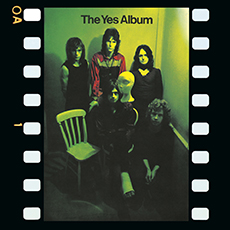
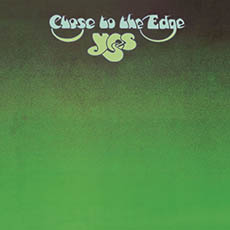
Get the Definitive versions of 5 Classic YES Albums on Amazon: The Yes Album, Fragile, Close To The Edge, Relayer and Tales From Topographic Oceans.
Remixed & Remastered by Steven Wilson in HD24-96 5.1 & Stereo, and also including the original YES/Eddy Offord mix, with a host of extra tracks.