YESSHOWS
The Original Opening Music Albums and a Guide to Pre and Post YESshow Music
by David Watkinson
YES Live – 1968-71
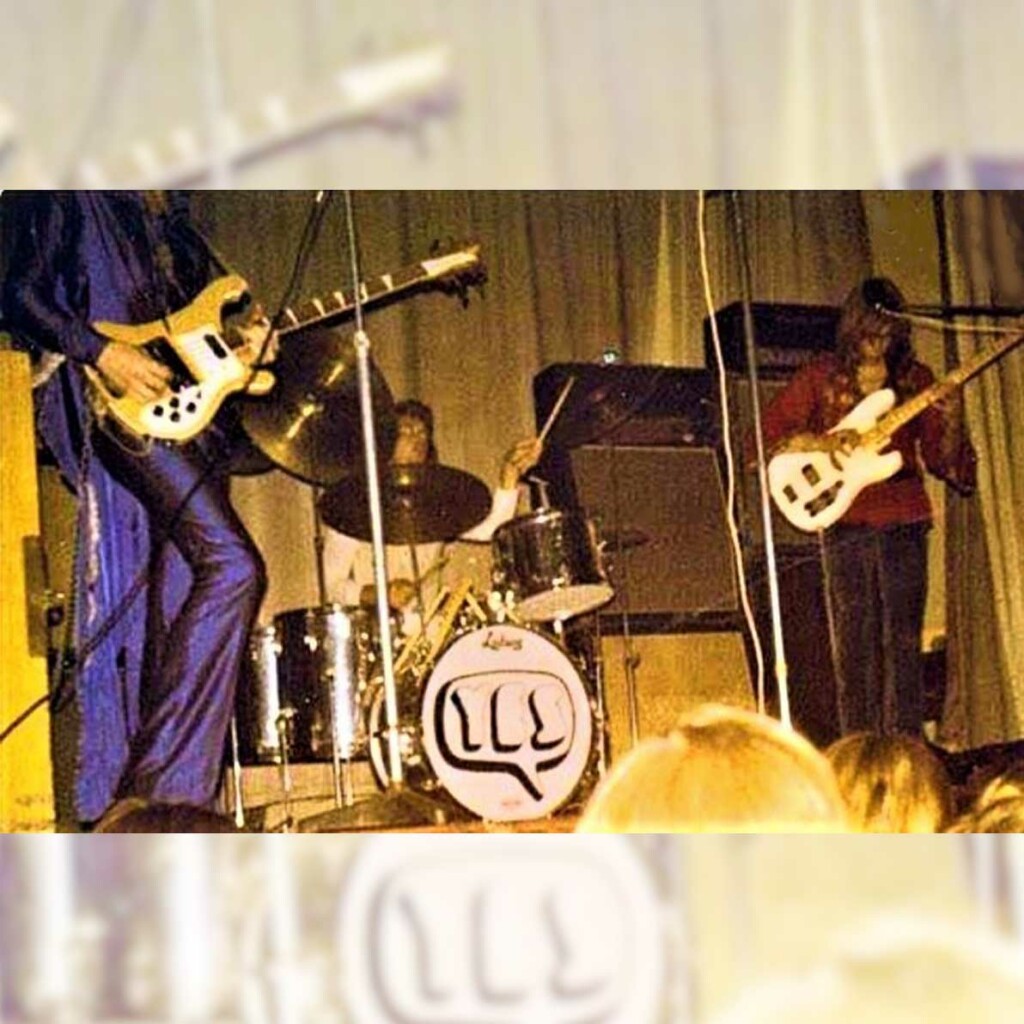
YES started out as a backing band and would feature low down on the tour schedule’s and concert billings of course, then, having no power to dictate the opening music or pretty much anything apart from the set list. But as soon as they became a headline act then producing a good show from beginning to the end was high on the list. As YES grew in popularity the whole concert experience could be considered, the sound, lighting and staging along with clothes and merchandise, it all could be tied in together. YES wanting the bigger sound as they moved ahead, taking a large step by changing and rearranging known songs, extending songs firstly and for their second album Time And A Word having the orchestra to join them, to make the YES sound as big as possible, it also meant a change was coming not only for their sound system (as the band Iron Butterfly had a better one) but with their guitarist, as the sounds that Peter Banks had been making suddenly began not to be in the direction YES were heading, although he played a huge part in laying down that YES sound from early on, one that Steve Howe would applaud many times, the change was always coming. The huge dynamic range that Steve brought to YES seemed to fit superbly, along with this own expanding musical vision. Steve Howe joined late 1970, with the result, the band creating what maybe for many, including the band members, would be known as ‘THE’ YES sound, on The Yes Album. Jon owned up to loving the classical music styles of Sibelius and Stravinsky and indeed it was confirmed by various band members, many times, that huge lumps were borrowed, lock stock and barrel in the creation of YES music. Chris Squire’s church music background had influenced his ideas also and so jointly you could see the YES music vision expanding, incorporating more and more as time went on, becoming more grandiose and classical in structure and sound.
Then of course in 1971 the next big leap in orchestration came with the new keyboard player Rick Wakeman. Out of the band went the great organist Tony Kaye and in came a composer, songwriter, multi keyboard player, the then current hottest musician on the block from working with David Bowie, and one that completely embraced the new technology such as the synthesiser, and importantly the Mellotron, once again making the YES sound even grander, giving the band more scope for creating larger works in length that maybe could even include choirs and church organs. This introduction of general classical music and structure gave the foundation for the idea of the pre-show introduction music. With a much more solid, enthusiastic, and creative line-up for YES, The YES Album was toured and released in January 1971, so maybe the confidence in what YES had become in style and substance gave the band the push to introduce the pre-show music. Obviously, all members had an interest in classical music, some more than others, but it was clear that their altering of borrowed works in length and structure was gained by listening to the great composers. YES were heading evermore cinematic in their vision.
It was said that YES went to watch the 1968 movie 2001 A Space Odyssey and liked it a lot, that clearly stuck in their minds as a striking musical memory as well as a visual one, the movie was a shock on many levels, presenting visuals and music like never before. Stanley Kubrick’s genius moment of adding classical music were many would have placed sound effects must have opened the bands ideas. Although the soundtrack album was not within this YES collection, I used the one I already owned, so here then, we have the first wonderfully uplifting and evocative piece of introduction music for YES, Also Sprach Zarathustra op.30 (Introduction – Sunrise), Richard Strauss (Used approximately 14 times).
It looks highly likely that the first use of the piece as the opening to a YESshow was on the The Yes Album tour, on 27 February 1971, at the once called Village Blues Club, the ‘Roundhouse’ in Dagenham, London. There YES’ set list included Yours Is No Disgrace, I’ve Seen All Good People, Clap, Classical Gas, Perpetual Change, Everydays and America. There are bootlegs of this show and others from around this time, but none that has the opening of the Sprach Zarathustra included. Also unusual on this tour, Chris Squire and Steve Howe would also combine for the first and last time to play the piece called “A Bass Odyssey”, a piece of improvising that would showcase Chris and his bass as a lead instrument, acknowledging the movie maybe, even if only in the title name alone. The bass guitar battle had both Steve on a Fender and Chris on his Rickenbacker, duelling it out on stage, pushing the boundaries of the bass guitar. At present it is hoped that (The) “A Bass Odyssey” recording will emerge on a future release of these early days, this one being one of those hidden YES live treasures for so long.
The Richard Strauss tone poem is mostly remembered for its spectacular use in the movie soundtrack or found popular accompanying a sunrise, a rocket lifting off, something of a grand or planetary scale importance, that’s what it purveys. There are several variations of the music and album releases. The soundtrack album must have been in Jon’s or the bands collection as it was such an influential movie and soundtrack. A successful album eventually going on to reach gold status, the story of the none named conductor and orchestra on the album cover was because the Decca executives didn’t want to cheapen their recording by associating it with some new silly space movie! The performance was by the Berlin Philharmonic Orchestra, conducted by Herbert Von Karajan.


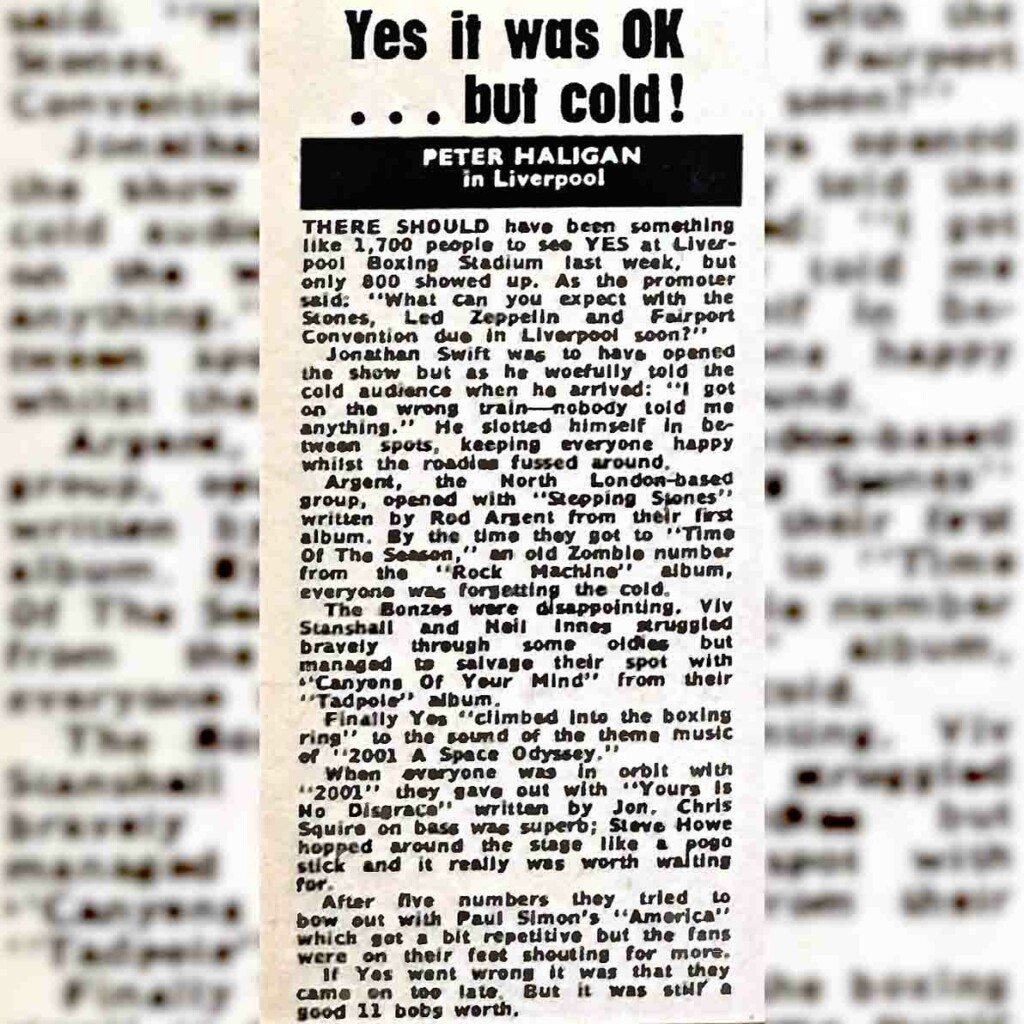
On many 2001 soundtrack albums it will be listed as the ‘Thus spoke or spake Zarathustra’, depending on whether it’s related to the movie release or the original German novel. The later released version of the soundtrack album did feature the tag ‘the movie music’ correctly, as clearly it turned out to be a hit in the end.
← PreviousNext →
Click here to read more of David’s articles & essays on YEShistory.